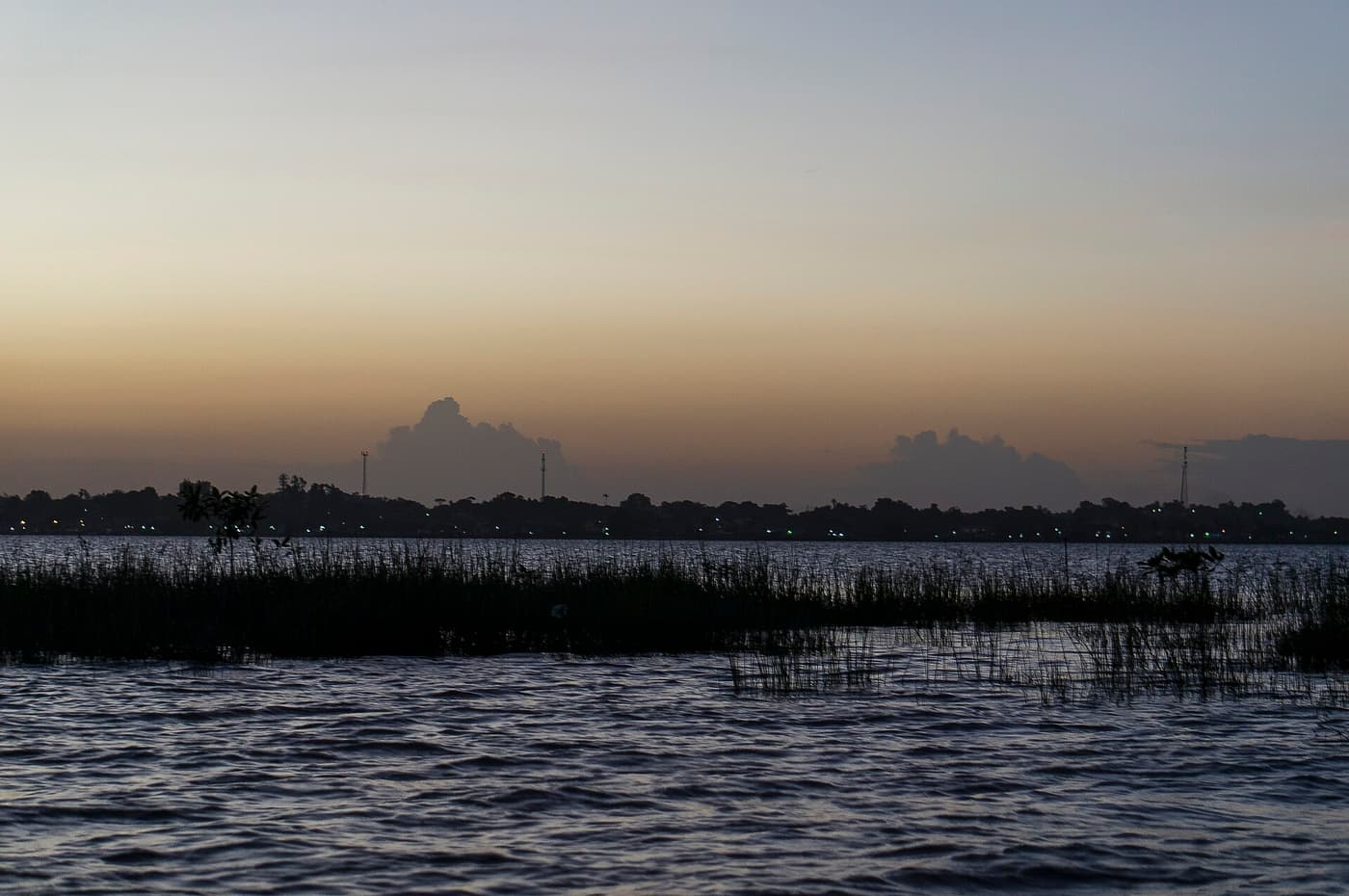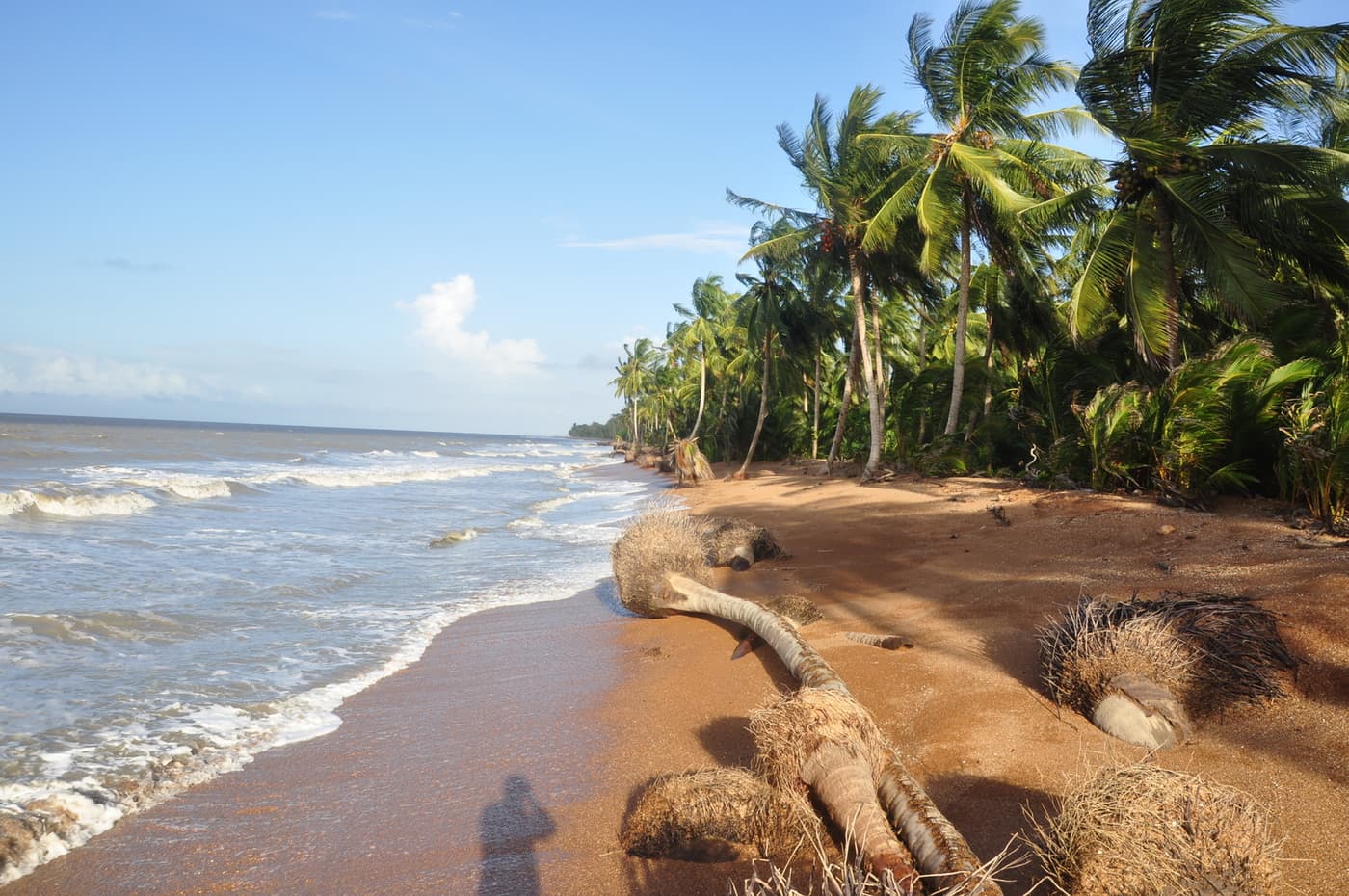
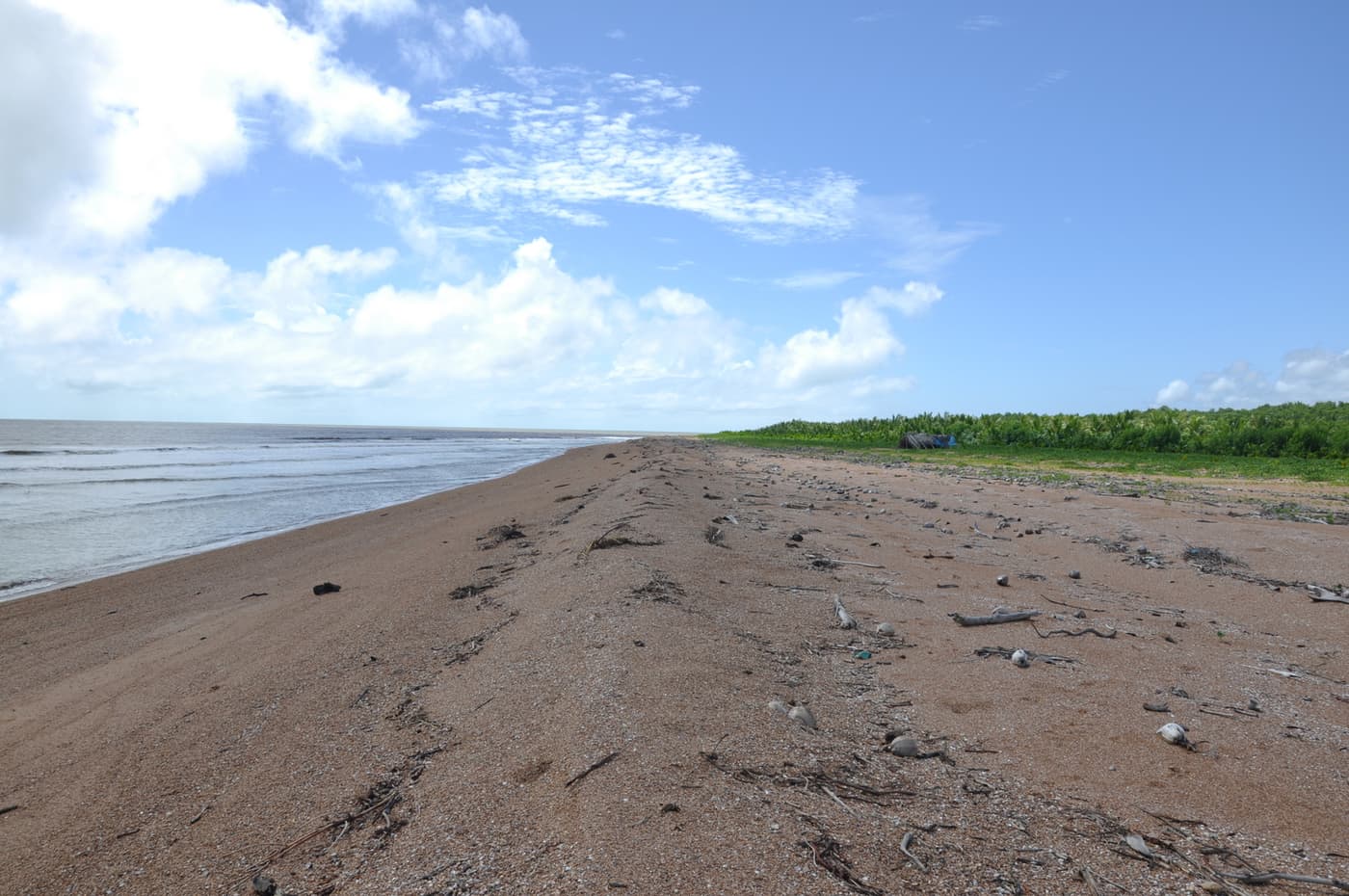
Between the mouths of the Pomeroon and Waini rivers, Guyana’s coast runs north-west for well over a hundred kilometres with no road, no town and barely a village. Behind it are mangroves and swamp forest; in front, a shallow brown sea. Parts of the shore are made not of sand but of countless tiny broken shells — hence the name.
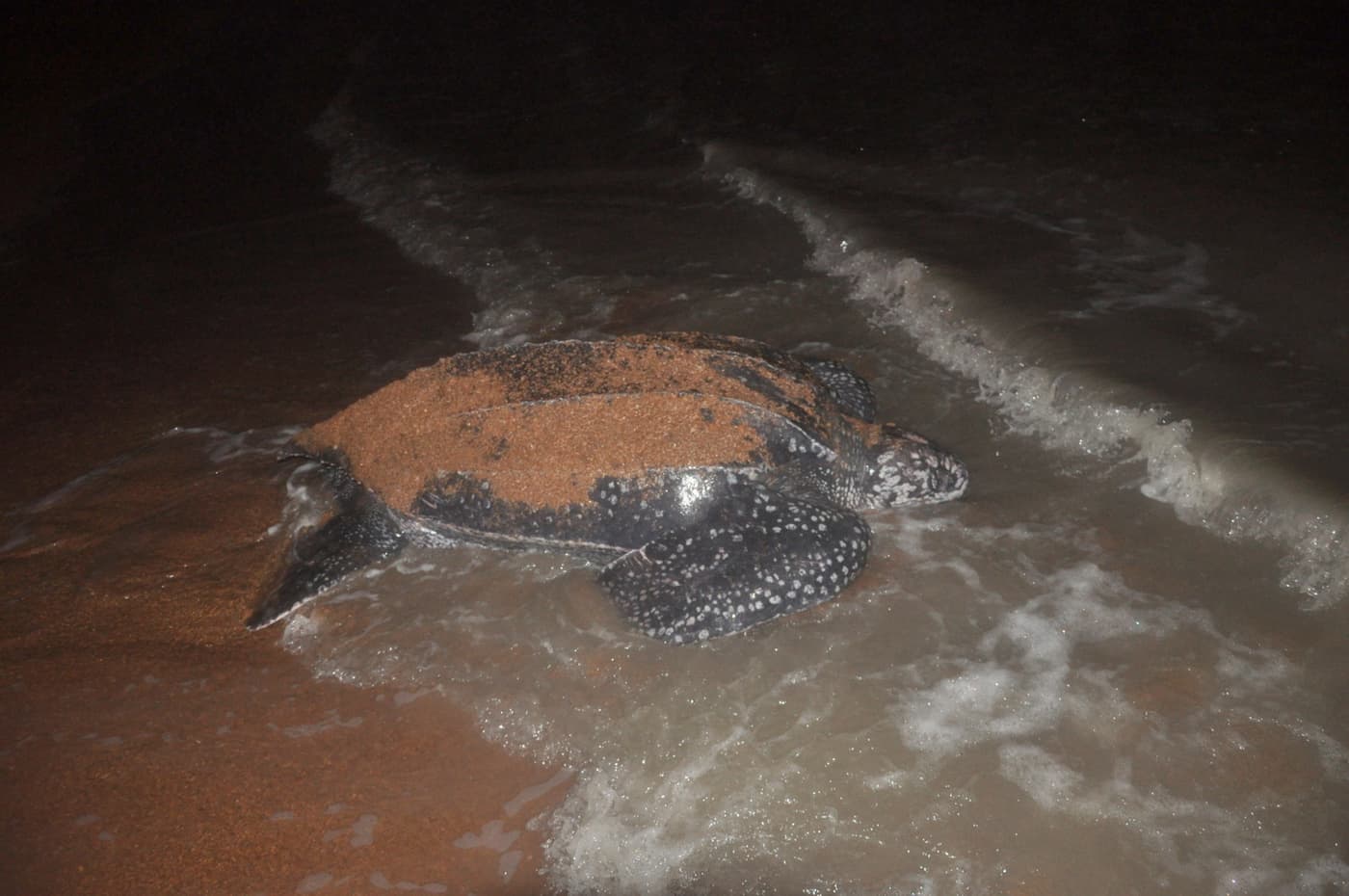
On these beaches, on dark nights between roughly March and August, sea turtles haul themselves out to dig their nests: the huge leatherback, the green, the hawksbill and the olive ridley. Conservation began here in the 1980s, when local turtle hunters were recruited as wardens, and the area was declared the Shell Beach Protected Area in 2011. A simple field camp at Almond Beach is the base for visits.
Be clear about what this is. Shell Beach is not a beach holiday: there is no hotel, the sea is silty, the insects are determined and the journey is long. It is a small, serious wildlife trip — and for those who make it, one of the most affecting nights in Guyana.
Highlights
- Watching a leatherback turtle nest by starlight
- Seeing hatchlings released at dusk later in the season
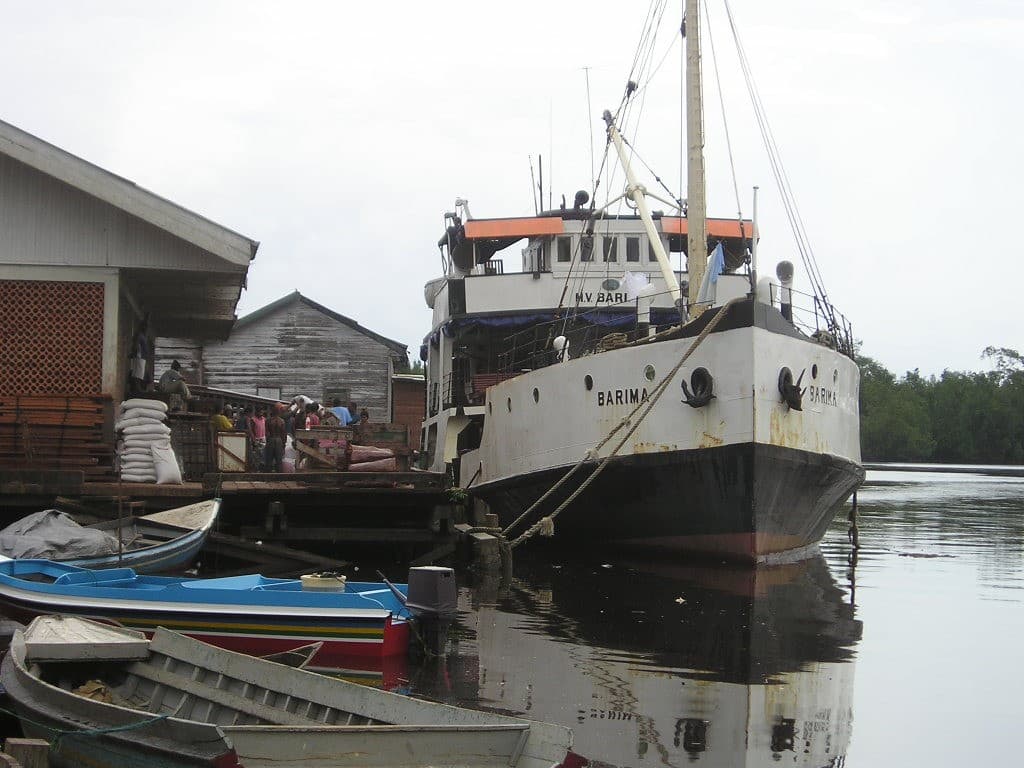
- The boat journey through mangrove creeks and the “99 turns”
- Scarlet ibis, herons and shorebirds along the coast
- Meeting the Arawak and Warao families who guard the beach
How long to stay
Plan three to four days from Georgetown: a day to get there, two nights on the beach to allow for a blank night or bad weather, and a day back.
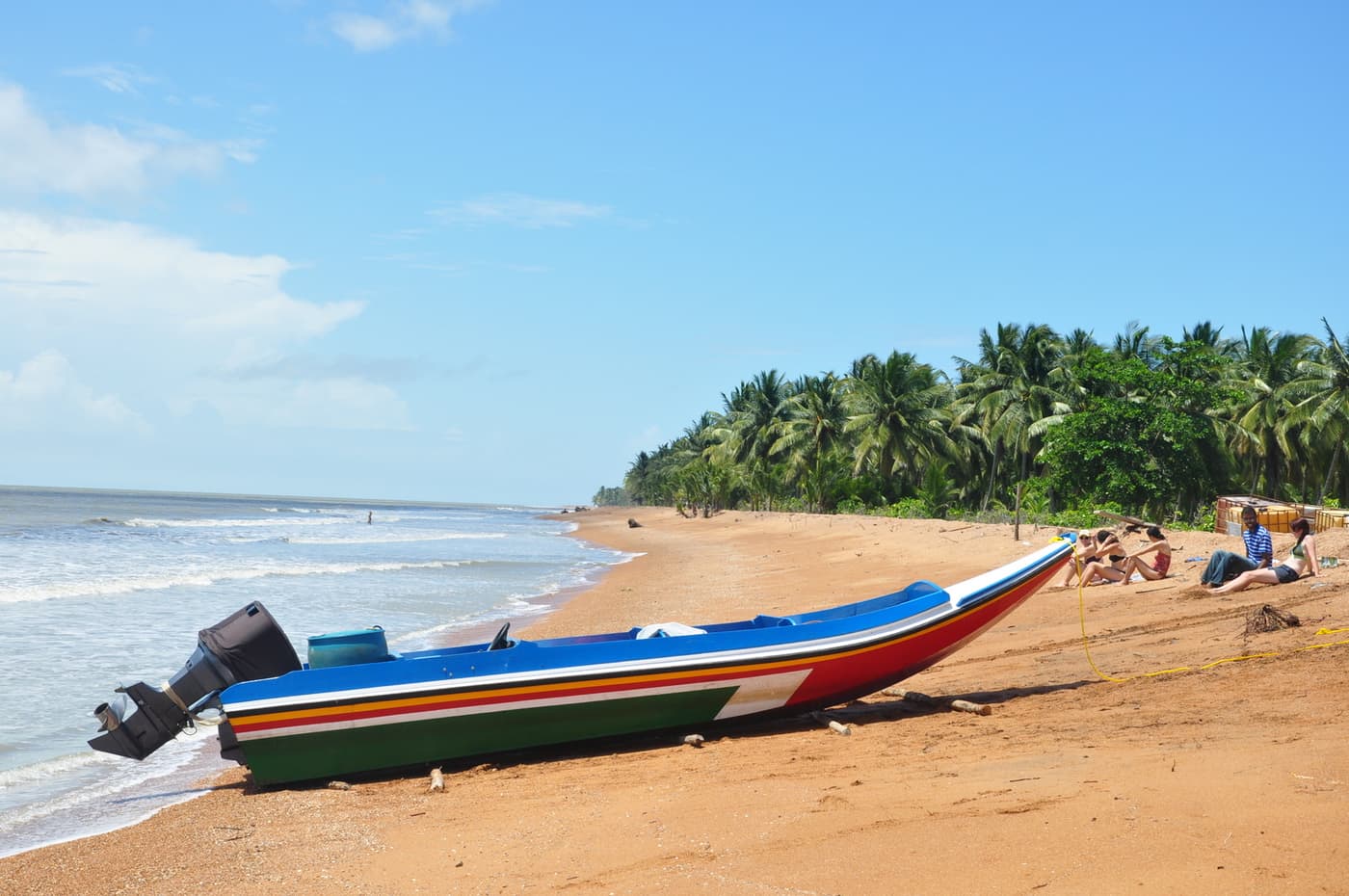
Best base
The Almond Beach camp is the only base on the shore. Mabaruma, the small regional centre, and Santa Rosa (Moruca) have guesthouses for breaking the journey.