Guyana lies just north of the Equator, and temperatures barely move: about 24–31 °C on the coast, hotter by day and cooler at night in the Rupununi. Seasons are defined by rainfall. The usual pattern is described below, but in recent years the rains have often come early, late or not at all, so treat every date as approximate.
The pattern
- The coast and the northern forest have two wet seasons: the long rains from about May to mid-August, and a shorter spell from about December to the end of January. The driest months are usually September to November and February to April.
- The Rupununi has one wet season, from about May to August or September, when much of the savannah floods, and one long dry season for the rest of the year.
For most first trips, the best windows are February to April and September to November.
Month by month
| Month | Coast & forest | Rupununi | Worth knowing |
|---|---|---|---|
| January | Short rains easing | Dry | Quieter after the holidays |
| February | Mostly dry | Dry | Mashramani on 23 February |
| March | Dry | Dry and hot | Phagwah; turtles begin nesting at Shell Beach |
| April | Dry, showers increasing late | Dry; first storms possible | Easter: kites in Georgetown, rodeo in Lethem, regatta in Bartica |
| May | Long rains begin | Rains begin | Independence Day, 26 May |
| June | Usually the wettest month | Savannah flooding | Kaieteur at full power; travel disruptions likeliest |
| July | Wet | Flooded; boat travel replaces some roads | Turtle nesting continues |
| August | Rain easing | Rains easing, still wet underfoot | Emancipation Day, 1 August |
| September | Dry and hot | Drying out | Amerindian Heritage Month |
| October | Dry | Dry | Rivers low: excellent for otters and fishing |
| November | Dry, showers late | Dry | Diwali usually falls in October or November |
| December | Short rains | Mostly dry | Christmas: pepperpot, masquerade bands, family visits |
How the seasons affect your plans
Kaieteur Falls
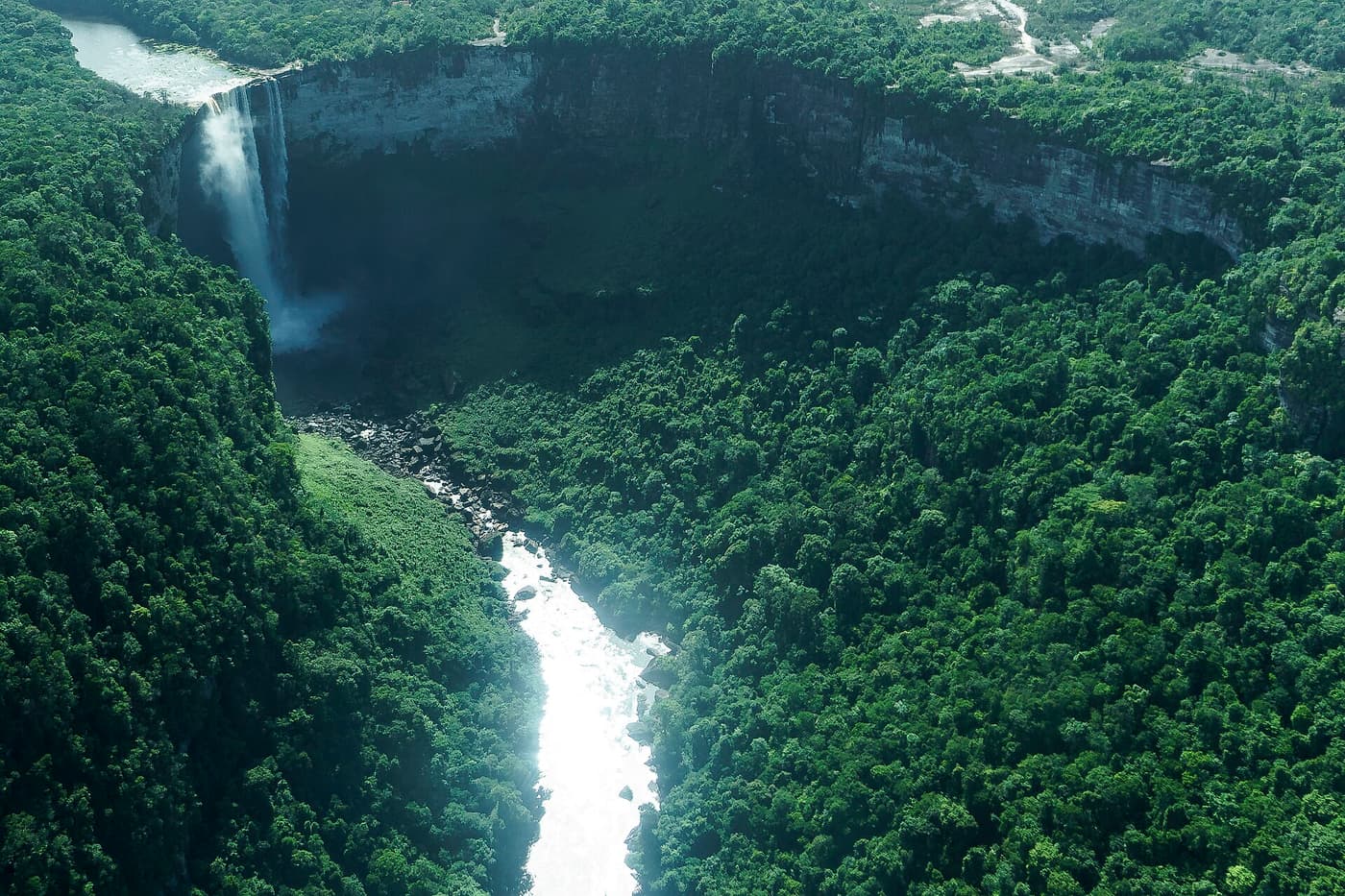
The falls are at their most thunderous during and just after the long rains and at their thinnest towards the end of the dry seasons — though even at low water the drop is immense. Rain also means more cloud and more postponed flights. See Kaieteur: when to go.
The interior road
The trail to Lethem is at its best in the dry months and at its worst from June to August, when journeys lengthen and sections may be impassable.
Wildlife
Low water in the dry seasons concentrates fish, otters, caiman and birds along the rivers and makes trails easier. The wet season brings waterbirds to the flooded savannah and turtles to Shell Beach. See the wildlife calendar.
Prices and availability
There is no dramatic high and low season in pricing, but lodges fill for Easter, for the main dry-season weeks and around Christmas. Guyanese living abroad return in large numbers in July, August and December, when international flights are fuller and dearer.
Festivals and public holidays
| When | Event | What happens |
|---|---|---|
| 23 February | Mashramani (Republic Day) | Costumed float parades, steel bands and street parties, biggest in Georgetown |
| March (date varies) | Phagwah (Holi) | The Hindu spring festival: coloured powder and water thrown in good humour |
| Easter weekend | Easter | Kite flying on the seawall; the Rupununi Rodeo at Lethem; the Bartica Regatta |
| 26 May | Independence Day | Flag-raising and official celebrations |
| 1 August | Emancipation Day | African heritage celebrated with dress, food and drumming, notably in the National Park |
| September | Amerindian Heritage Month | Indigenous food, craft, dance and sport, with a heritage village chosen each year |
| October or November | Diwali | The festival of lights: clay lamps and illuminated motorcades |
| Dates vary | Eid ul-Fitr and Eid ul-Adha | Public holidays marked by the Muslim community |
| 25–26 December | Christmas and Boxing Day | Pepperpot, black cake, garlic pork and masquerade bands |
Festival dates set by lunar calendars move each year; confirm them before planning around one.